About
The development of this database is a supervised by both Prof. Le Zhang and Prof. Kang Li. The maintenance of this database is generally performed by PhD student Fubo Ma.
Our primary objective is to provide data support for research on IFN-I in tumor immunity by collecting literature reports, clinical trial records, and molecular biology knowledge from public databases.
The database was developed using Next.js for server-side rendering, with React as the core UI framework and Ant Design for component-based interfaces. We also adopted CSS Modules for scoped styling, and Apache ECharts for interactive data visualization.
Antitumor Immunity Reports
This module constructs a knowledge graph that collects IFN-I antitumor immunity literature reports from PubMed.
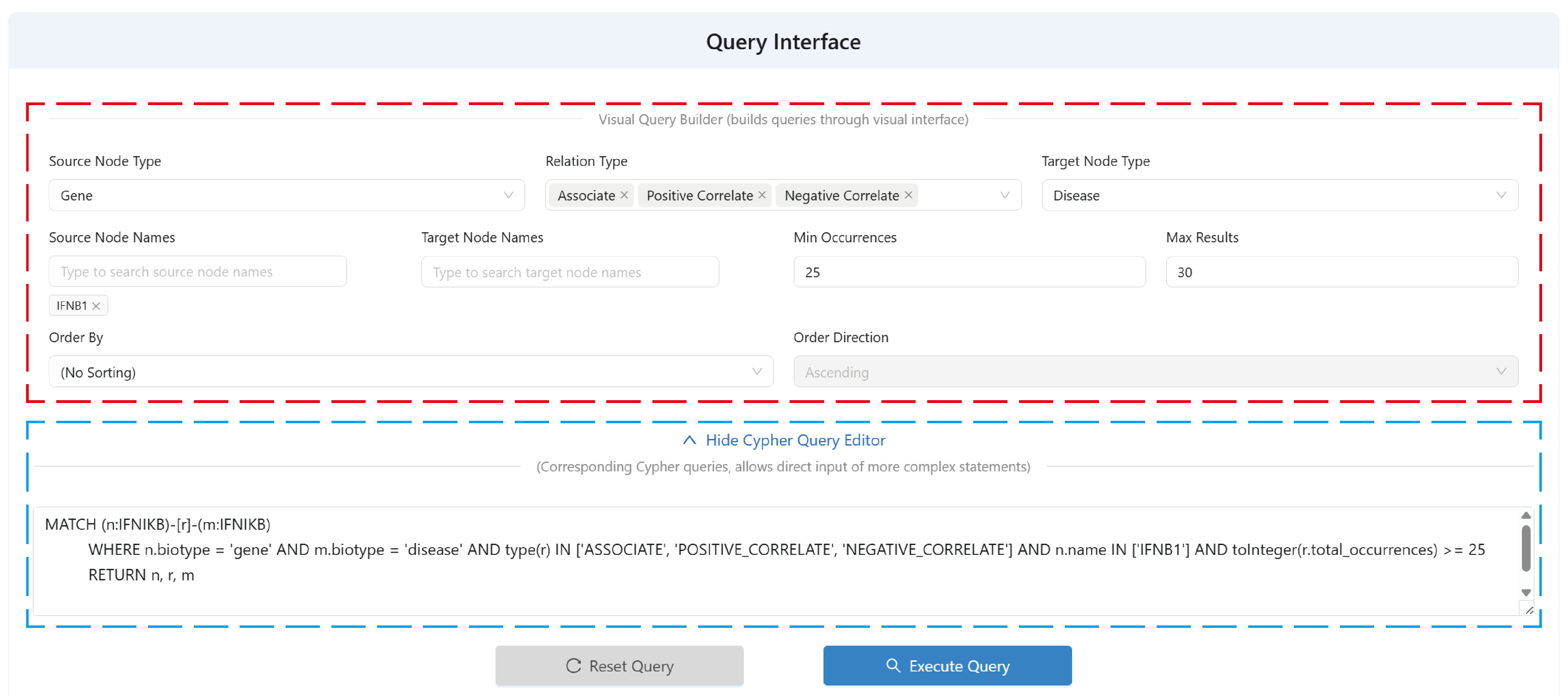
Users can generate Cypher queries from interactive interface on "Visual Query Builder" (red box) to search from constructed knowledge graph (built on Neo4j 4.3.1). IFNIKB also allows to directly input more complex Cypher query statements in the "Cypher Query Editor" (blue box).
Users can click on nodes and connections of the generated knowledge graph to view detailed information. Notably, the supporting papers component can be refreshed by clicking "Click to get details," which allow users to check the literature evidence supporting a specific node or connection.
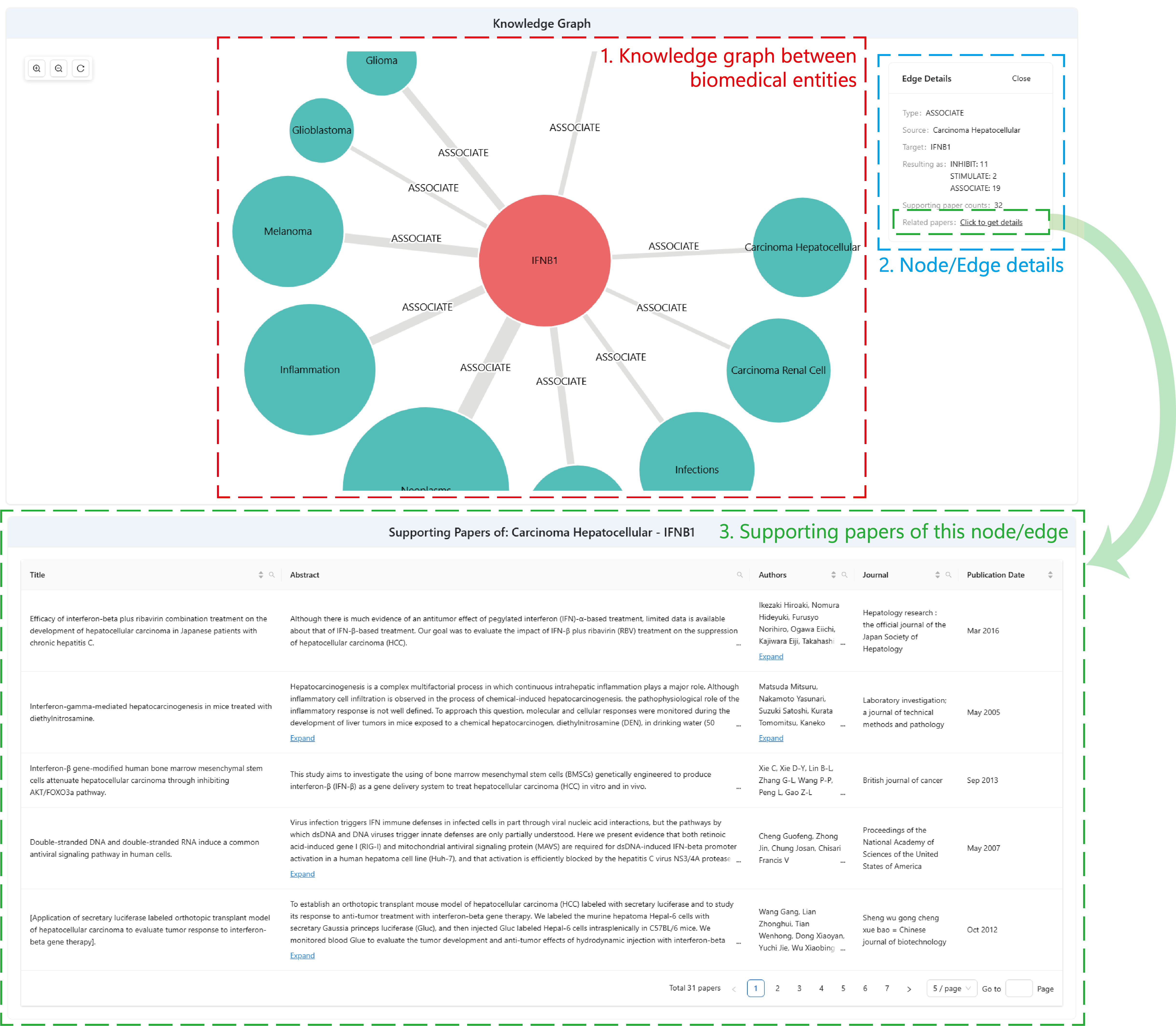
Users can then click on the nodes and edges of the knowledge graph to get detailed information. Notably, the "Supporting Papers" component can be refreshed by clicking "Click to get details", which allows users to check the literature evidence supporting a specific node or edge.
Clinical Applications
In this module, users can retrieve clinical trial information related to IFN-I from multiple databases by searching for keywords in fields such as "Title," "Status," and "Phase."

Here, it presents more comprehensive information of the clinical trial. The navigation menu at the top allows users to quickly jump to sections of interest.

Molecular Information
In this module, users can search for IFN-I gene and protein data through two search modes: "By Species" or "By IFN-I Name". Additionally, the phylogenetic relationships of associated species in this research can be accessed in the "Phylogeny of Organisms" module.
By Species

By IFN-I Name

On the detail page, users can access to IFN-I genes of interest through "Filter Options".

Evolution & Comparative Genomics
In this module, we provide a comprehensive set of comparative genomics analysis tools to researchers. It is divided into three submodules: "Multi-Sequence Alignment", "Sequence Identity Matrix", and "Phylogeny of Organisms".
Multi-Sequence Alignment
This module enables an analysis of cross-species multiple sequence alignment. Users can add or remove IFN-I sequences for alignment as they want.

Sequence Identity Matrix
This module provides an analysis of cross-species sequence identity. By selecting different species and setting identity thresholds, users can obtain analysis results that meet the specified filtering criteria.

Phylogeny of Organisms
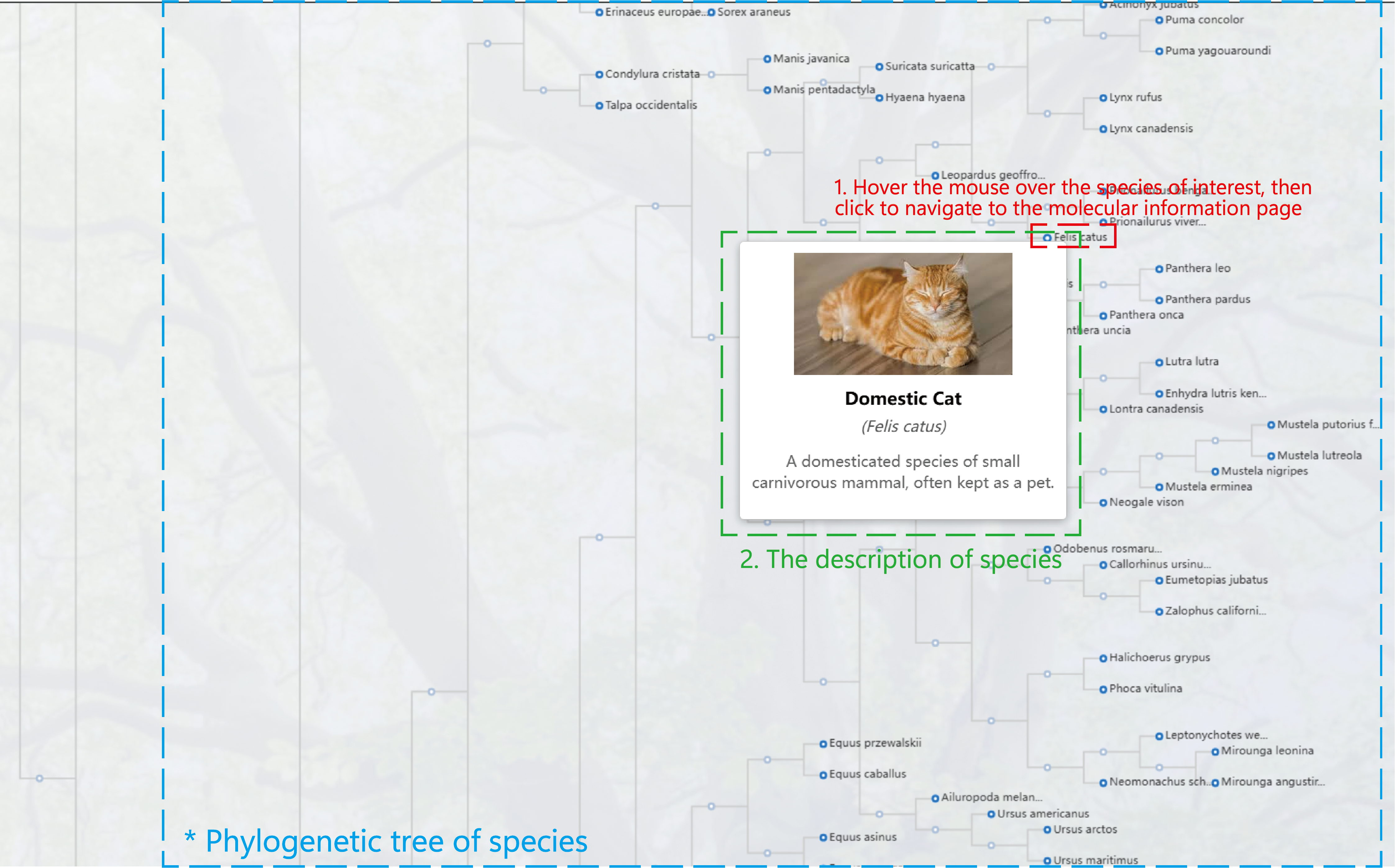
This module displays the phylogenetic relationships of associated species in this research. Users can click on a species to navigate to their corresponding Molecular Information page.
Case studies
Here, we provide a comprehensive example to help users understand the workflow of each module in IFNIKB.
As is well known, in 1986, IFNα2 was prescribed for its antiproliferative activity. (Nature Reviews Drug Discovery 2019;18(3):219-234.). A clinician-scientist interested in this topic decides to use IFNIKB for relevant research.
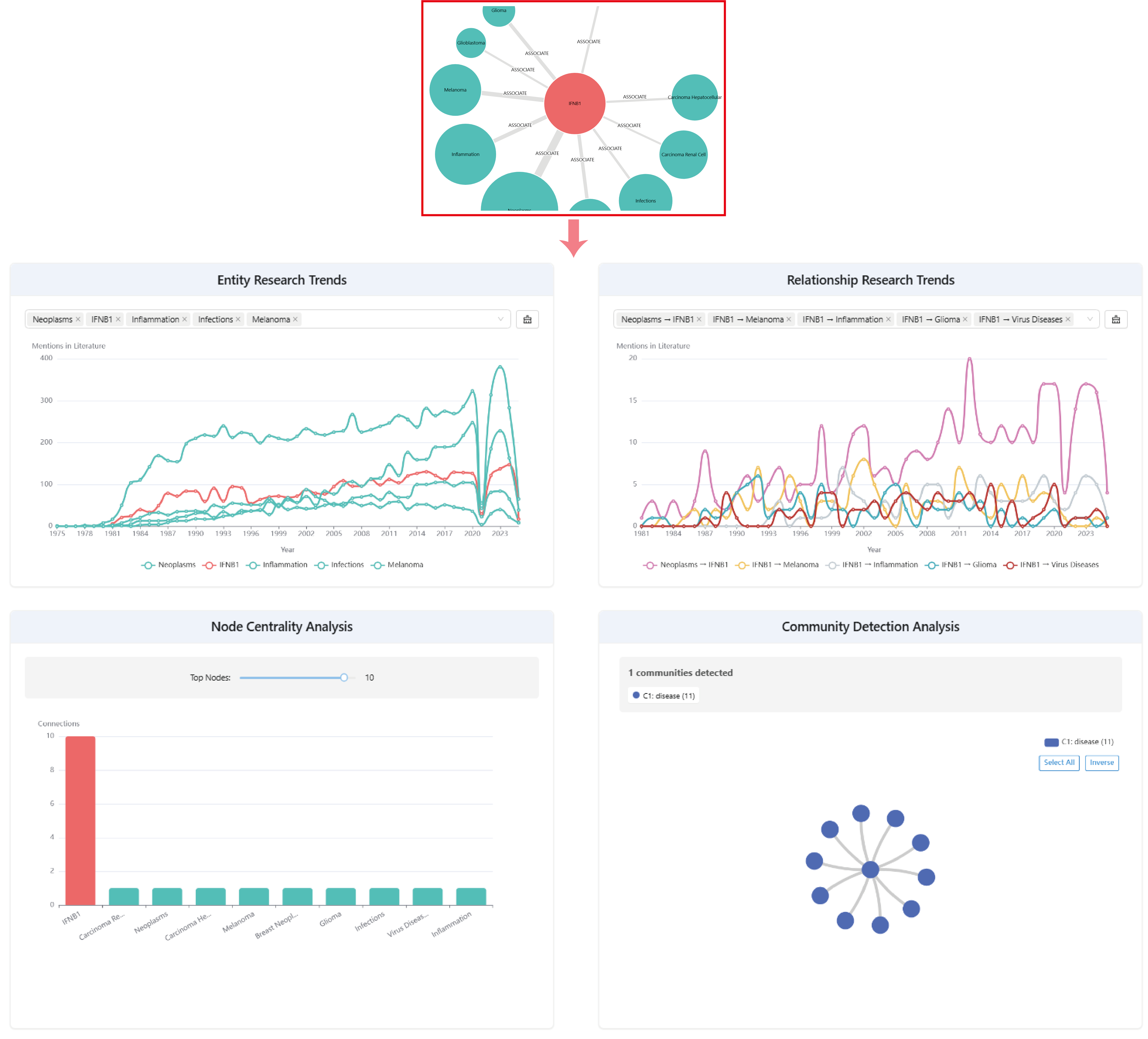
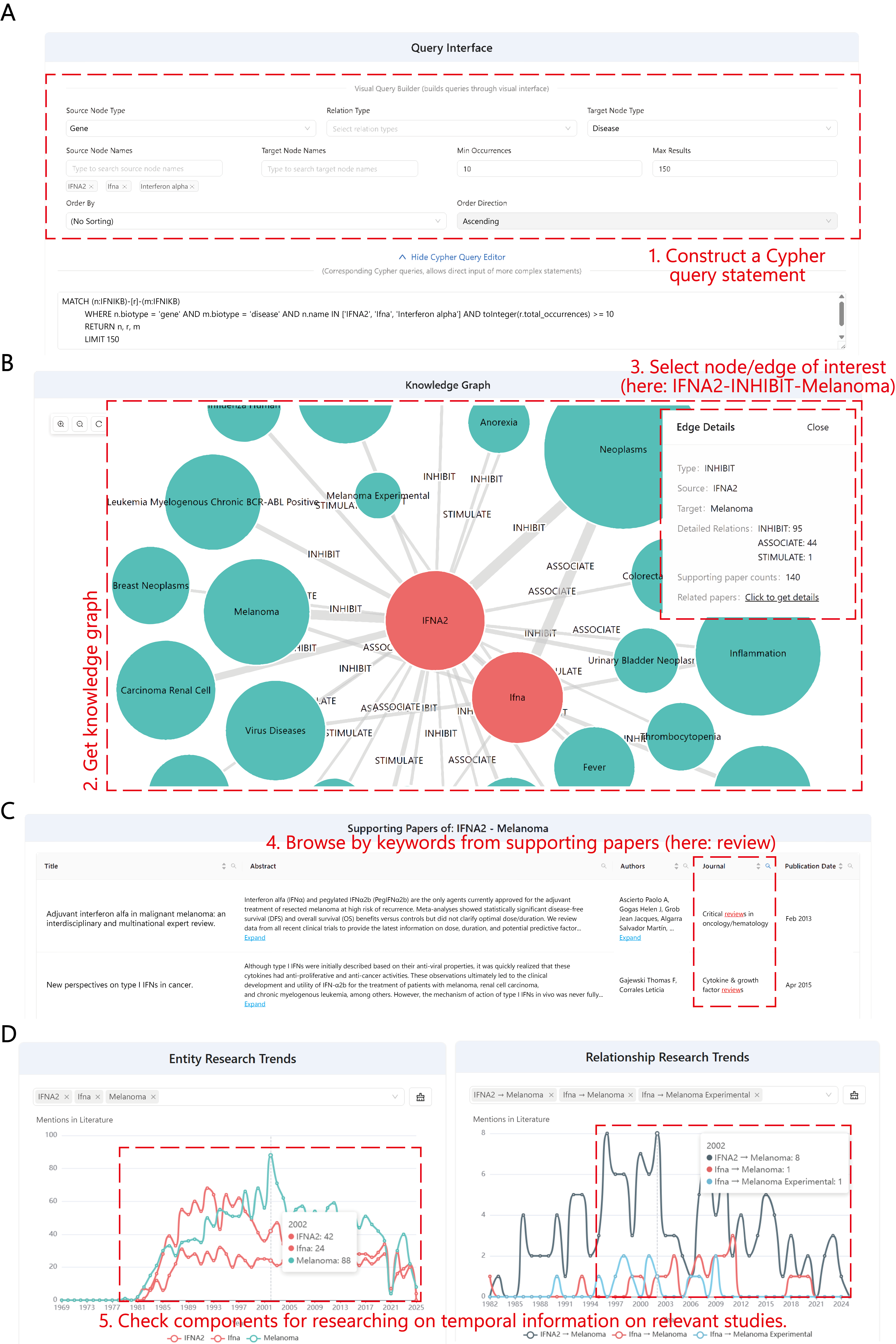
1) First, the user navigates to the "Antitumor Immunity Reports" module and interact with the "Visual Query Builder" to generate a knowledge graph for discovery of "researches related to IFNα2 and cancer" (Figure A, Step 1). The results show that IFNA2 (sometimes referred to as "Ifna" in Mus musculus) is closely associated with multiple cancers. Taking "melanoma" as an example, 140 publications confirm a relationship between IFNA2 and melanoma, with 95 explicitly indicating that IFNA2 has an "INHIBIT" effect on melanoma, which aligns with general knowledge in the field (Figure B, Step 2). At this stage, the user considers to obtain a review article for a systematic understanding of the topic (Figure B, Step 3). This could be achieved by filtering "review" in the "Supporting Papers" component (Figure C, Step 4). Finally, by examining the "Entity Research Trends" and "Relationship Research Trends" components, the user discovers that researches in this field dates back to the 1980s, with a research peak in 2002, during which hundreds of papers were published per year to discuss the impact of IFN-I on melanoma (Figure D, Step 5).
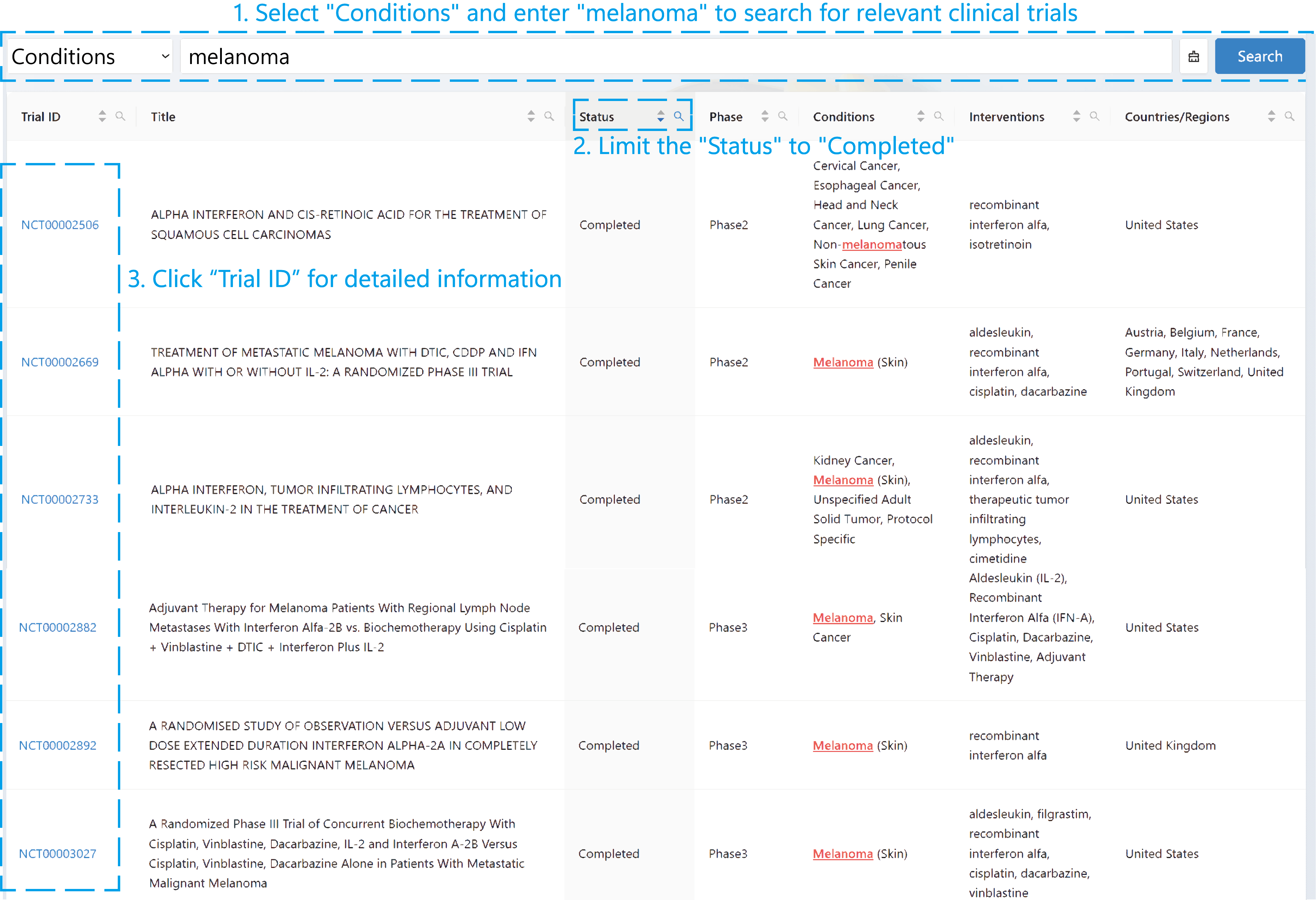
2) Based on the knowledge above, the user hypothesizes that there are plenty of clinical trials have already tested IFN-I for melanoma treatment. Consequently, the user navigates to the "Clinical Applications" module, selects "Conditions", and inputs "melanoma" as the search term (Step 1). The user then refines the results by restricting the "Status" to "Completed" (Step 2), which returns 63 clinical studies. By clicking on "Trial ID", the user accesses detailed information on studies of interest (Step 3).
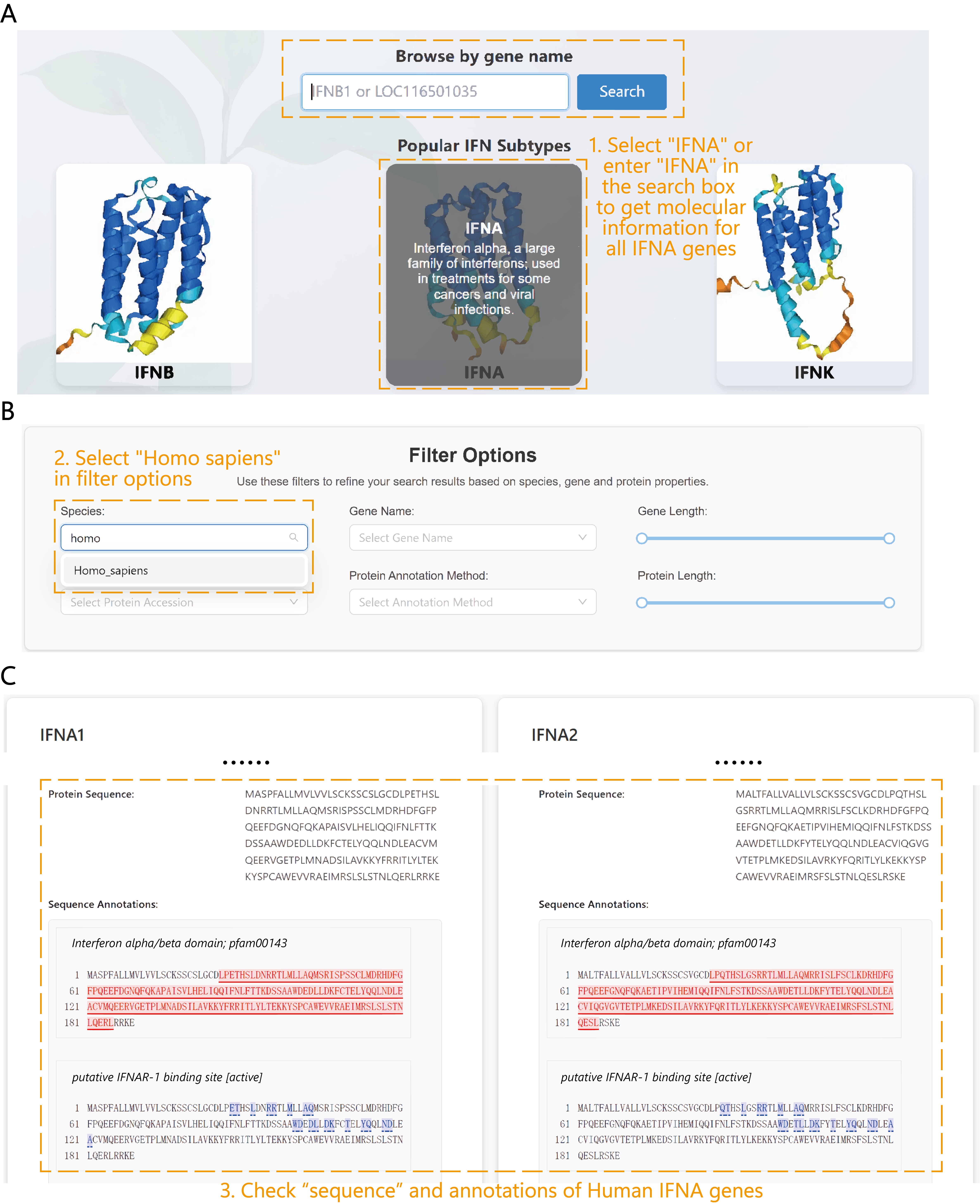
3) During the selection of node genes within the construction of knowledge graph, the user observes that multiple "IFNA" genes exist in the human genome apart from "IFNA2". To explore this further, the user enters the "Molecular Information" module, and searches for "IFNA" genes by clicking on the "IFNA" image (Step 1). After restricting the selected species to Homo sapiens (Step 2), the user identifies 13 functional "IFNA" genes. The information in card reveals that the sequences, structures, and functional domains of the corresponding IFN-α proteins are highly conserved (Step 3).
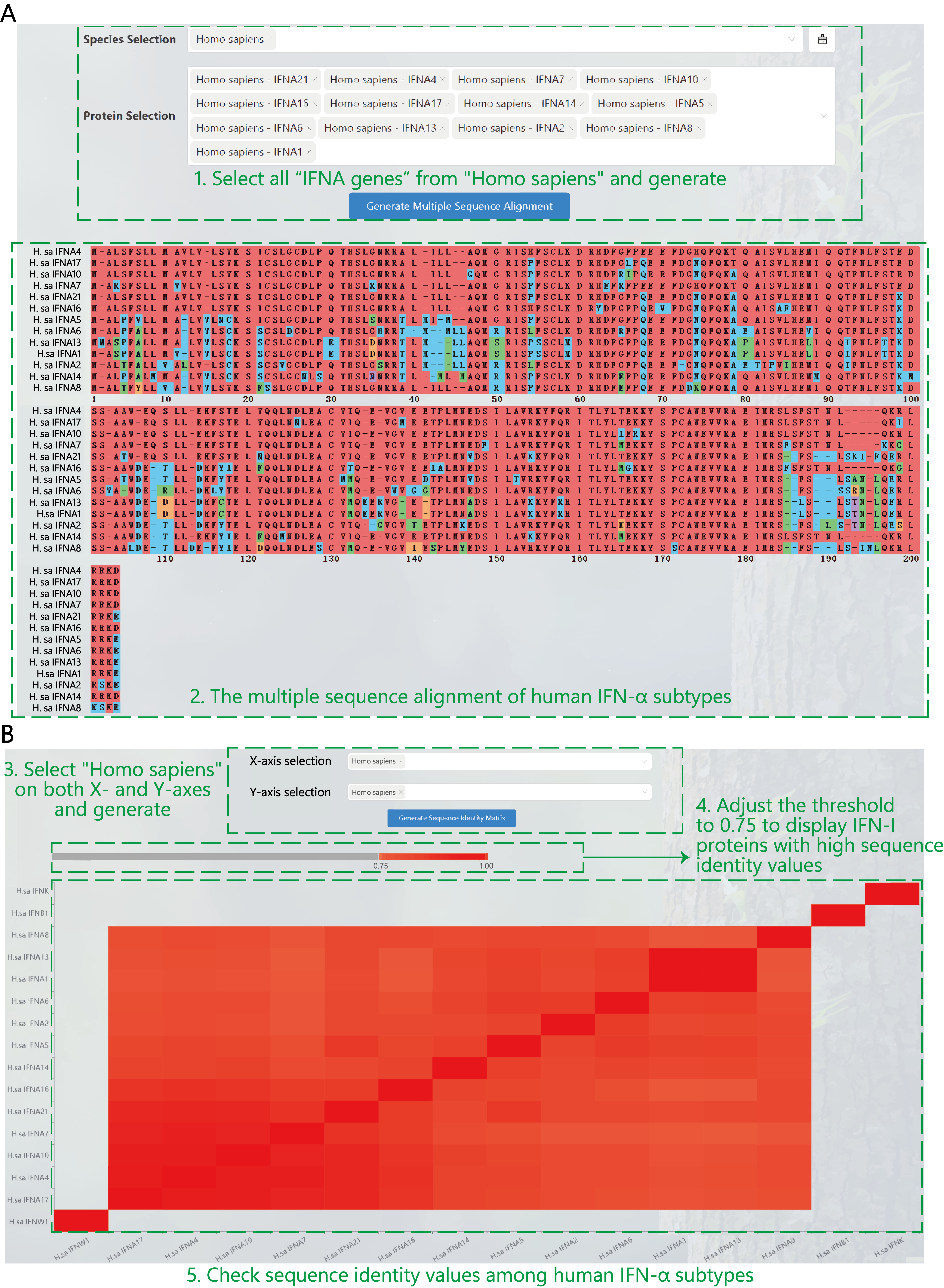
4) Finally, the user validates the hypothesis through the computational tools that provided in the "Evolution & Comparative Genomics" module. The "Multi-Sequence Alignment" analysis demonstrates that the majority of amino acids are conserved among human IFN-α subtypes (Step 1 and 2). Additionally, within the "Sequence Identity Matrix" module, the user finds that the sequence identity values among human IFN-α subtypes are all greater than 0.75 (Step 3, 4, and 5). These findings suggest that other IFN-α subtypes, such as IFN-α1 or IFN-α8, could potentially be explored for antitumor immunotherapy.
We welcome you to contact us and share your experiences and workflows with IFNIKB so that we can assist more researchers in their work!
How to Cite
If IFNIKB has contributed to your research, please cite: ...
Licenses
IFNIKB is free for academic use only. For any commercial use, please contact us in advance.
Contact Us
For bug reports or development suggestions, please contact:
Prof. Le Zhang
College of Computer Science, Sichuan University, Chengdu, China
Email: zhangle06@scu.edu.cn
Fubo Ma
West China Hospital, Sichuan University, Chengdu, China
Email: fuboma@stu.scu.edu.cn